
he Role of Mining in Economic Development
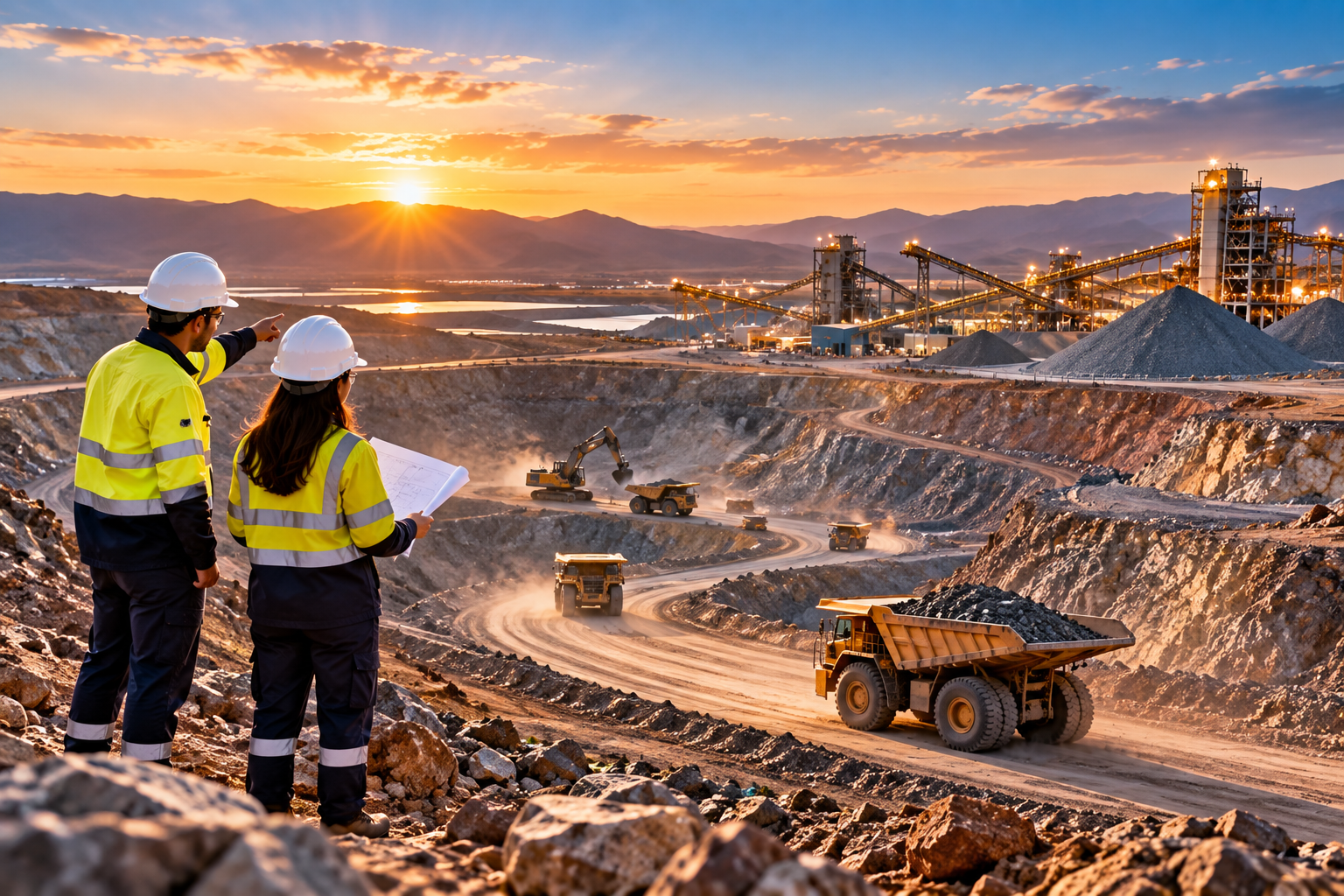
Mining development plays an important role in economic growth, industrialisation, infrastructure development, and job creation. Minerals and natural resources provide essential raw materials for industries ranging from construction and manufacturing to energy, transportation, electronics, and technology.
Successful mining projects, however, require much more than extracting minerals from the ground. Modern mining development projects depend on detailed exploration, engineering expertise, feasibility studies, environmental planning, infrastructure development, project management, operational efficiency, and responsible resource management.
A well-planned mining operation can create long-term economic opportunities while contributing to the development of surrounding communities and supporting broader industrial growth.
Mining Exploration and Feasibility Studies
Every successful mining project begins with understanding the resource. Mineral exploration involves geological studies, surveys, sampling, drilling, and technical analysis to determine the location, size, quality, and commercial potential of mineral deposits.
Once a promising resource has been identified, a comprehensive mining feasibility study can assess whether developing the project is technically and economically viable.
This process considers important factors such as mining methods, infrastructure requirements, processing facilities, equipment, capital investment, operating costs, logistics, environmental considerations, and expected production.
Strong feasibility planning allows investors and project developers to make informed decisions before committing significant resources.
Mining Engineering and Infrastructure Development
Professional mining engineering services are essential when transforming mineral resources into productive operations.
Mining engineers work alongside civil, structural, mechanical, electrical, and environmental specialists to design safe and efficient mining operations. Depending on the project, development may include open-pit or underground mining infrastructure, access roads, processing plants, power systems, water infrastructure, workshops, storage facilities, offices, and accommodation.
Effective mining infrastructure development should consider not only immediate production requirements but also future expansion and the long-term performance of the operation.
Mining Project Management
Large mining projects involve multiple contractors, suppliers, engineers, consultants, regulators, investors, and local stakeholders. Effective mining project management brings these different components together under a coordinated strategy.
Project managers oversee critical areas such as scheduling, procurement, budgeting, contractor management, risk assessment, quality control, construction supervision, and project delivery.
Careful cost management and project planning can reduce unnecessary expenditure, minimise delays, and ensure that resources are allocated efficiently throughout the mining lifecycle.
Technology and Modern Mining Operations
Technology is transforming the mining industry. Modern operations increasingly use mining automation, digital monitoring systems, drones, data analytics, advanced machinery, artificial intelligence, and remote-control technologies to improve productivity and operational visibility.
These technologies can provide valuable information about equipment performance, production levels, site conditions, maintenance requirements, and resource utilisation.
Digital transformation therefore allows mining companies to make faster, data-driven decisions while improving efficiency across their operations.
Sustainable and Responsible Mining Development
The future of the industry increasingly depends on sustainable mining practices. Mining companies must consider environmental protection, responsible water management, energy efficiency, waste reduction, land rehabilitation, worker safety, and community engagement throughout the project lifecycle.
Responsible development also involves understanding the social and economic impact that mining operations can have on surrounding communities.
When properly planned and managed, mining projects can support employment, local procurement, skills development, infrastructure improvement, and regional economic activity.
From Mineral Resources to Long-Term Value
Successful mining development requires a balance between technical expertise, financial planning, operational efficiency, environmental responsibility, and effective project management.
From mineral exploration and feasibility studies to engineering, construction, processing, production, rehabilitation, and eventual mine closure, every stage requires careful planning.
By combining mining engineering, project management, modern technology, infrastructure development, and sustainable mining solutions, mining organisations can transform valuable natural resources into productive operations that generate economic value while supporting responsible and sustainable development.